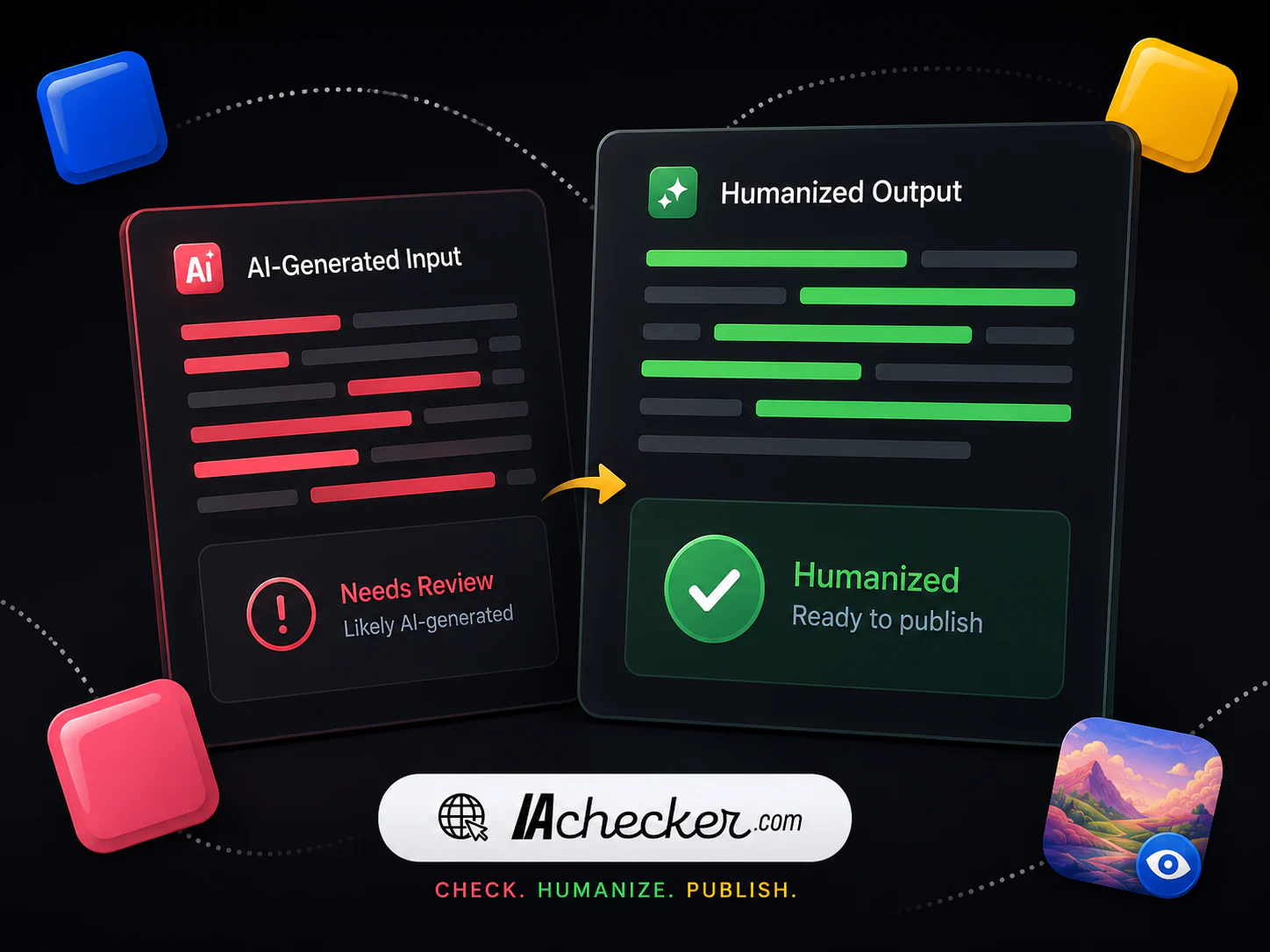
Humanization should make a draft easier to read without changing what the writer meant. The best result is not simply different wording. It is a clearer rhythm, more natural transitions and a consistent voice that still carries the original facts.
This guide explains the review principles behind that process. It also shows where detection scores can help and where human judgement still matters.
What AI humanization changes
A basic paraphraser often replaces words or rearranges a sentence. A humanizer works across the full draft. It can vary sentence length, remove repetitive transitions, smooth paragraph structure and replace formulaic phrasing with language that fits the surrounding context.
The goal is not to introduce artificial quirks. Strong humanization keeps the writing coherent while reducing patterns that make every sentence feel built from the same template.
Why meaning comes first
A rewrite is useful only when names, numbers, quotations, dates and claims remain accurate. Review those elements before judging style. A fluent sentence that changes the evidence is a worse result than an imperfect sentence that stays faithful to the source.
Good humanization changes how the draft reads, not what the draft proves.
For professional work, the final review should also check terminology, citations and any wording that carries legal or technical meaning.
A practical review workflow
- Read the source once. Identify the argument, facts and tone before changing anything.
- Humanize the complete passage. Paragraph context produces a more consistent result than isolated sentences.
- Compare protected details. Verify names, figures, dates, links and quotations.
- Read the output aloud. Awkward rhythm and over-formal language become easier to hear.
- Add your own judgement. Restore examples, preferences and context that only the writer can provide.
How to read detection scores
AI detection is probabilistic. A score can highlight passages that deserve a closer look, but it cannot establish authorship on its own. Different models can disagree because they measure different patterns and use different thresholds.
Use the result as one signal alongside the writing history, sources and context. IA Checker keeps that distinction visible so a score supports review rather than replacing it.