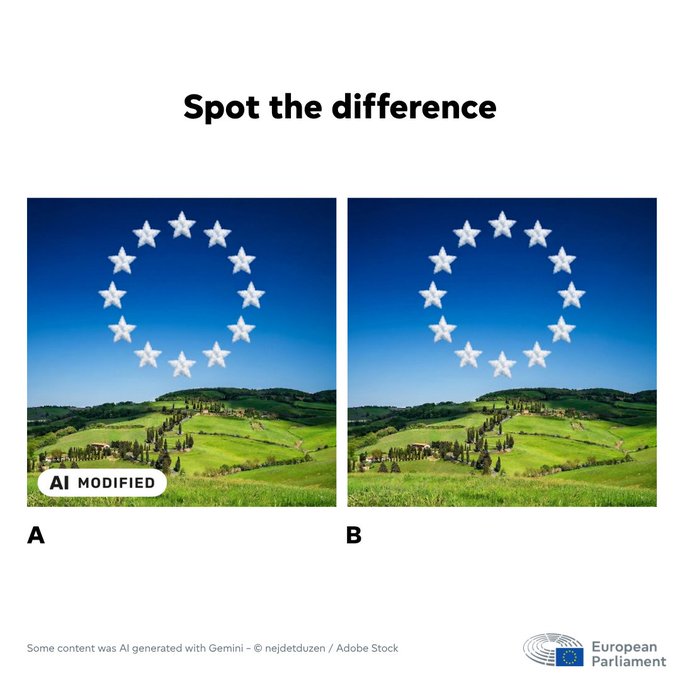
The European Union has released three official labels for content created or materially changed with artificial intelligence. This page explains the difference between them and provides direct PNG and SVG downloads for designers, publishers and product teams.
The labels support the transparency framework in Article 50 of the EU AI Act. The icons are optional, but the underlying disclosure duties are not. Always assess the specific content, your role and the applicable exceptions before relying on a label.
Download the 3 official EU AI labels
These files are the black versions published by the European Commission. PNG is convenient for documents, social posts and presentations. SVG stays sharp at any size and is generally the better choice for websites and product interfaces.
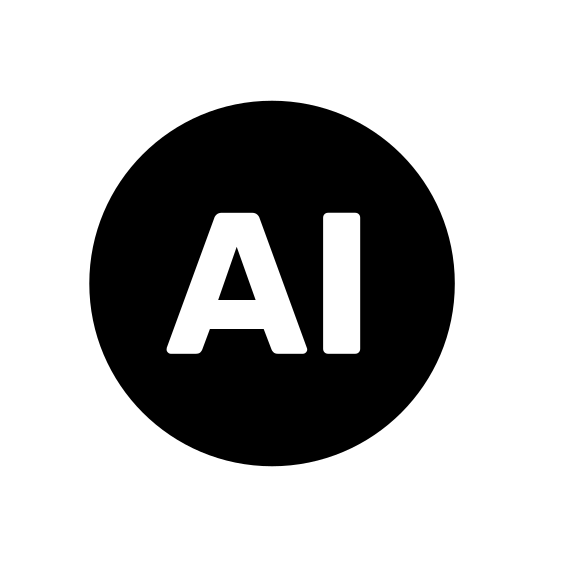
Basic AI icon
Use when AI contributed to the content, or when a nearby label or interactive layer explains the exact role of AI.
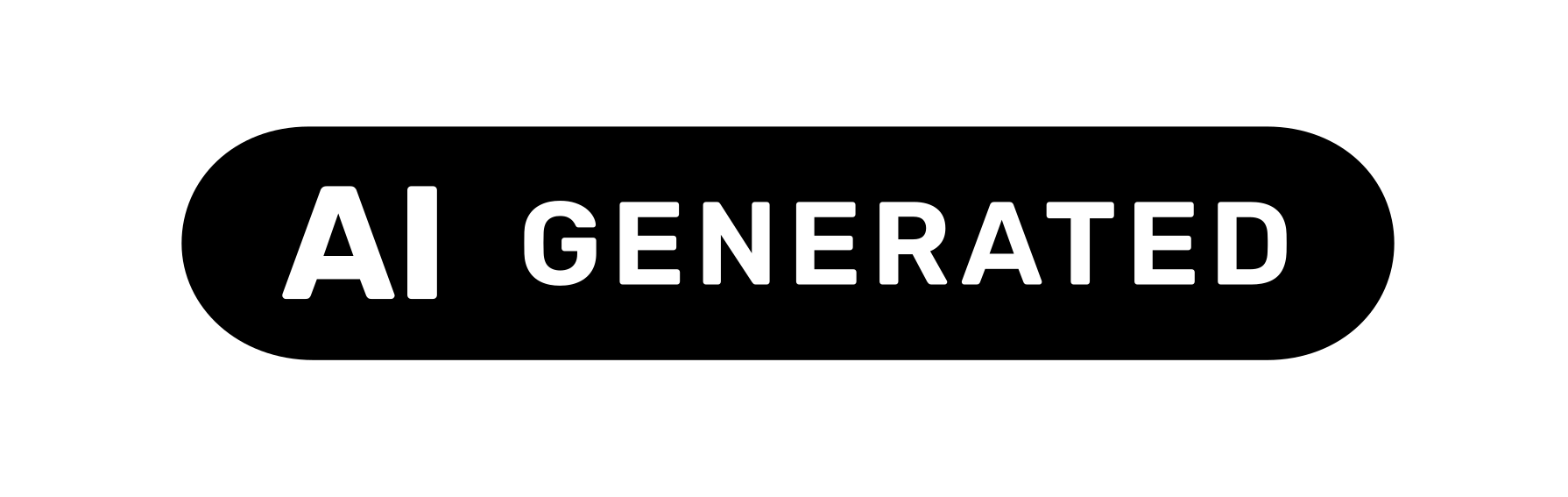
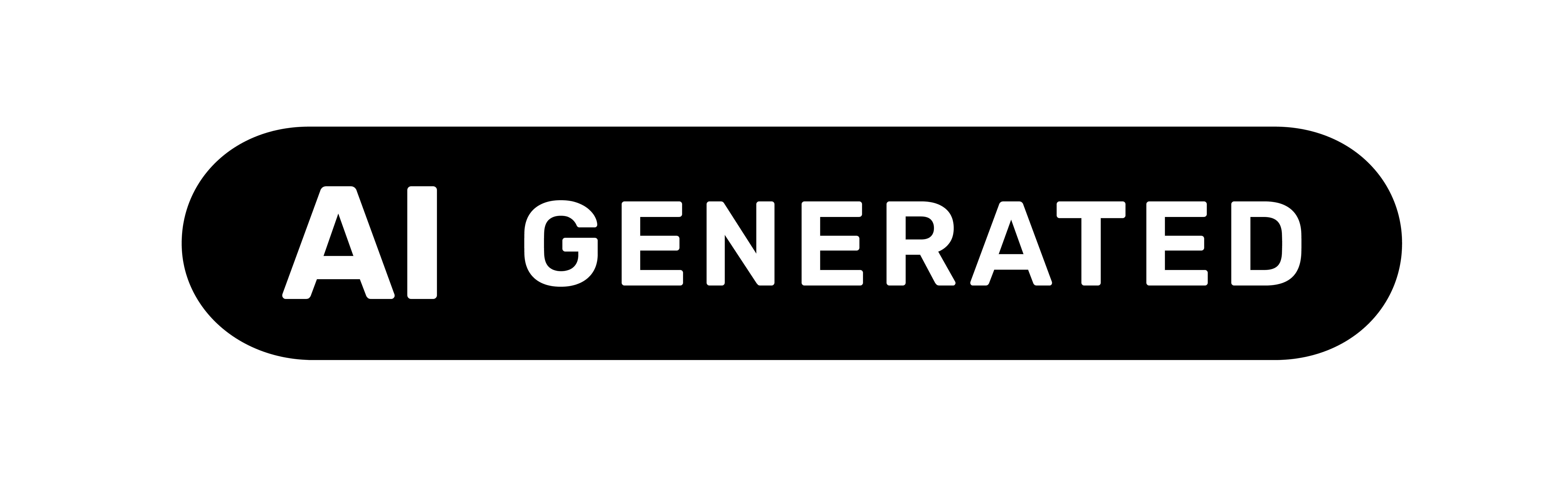
Fully AI-Generated
Use when the content was generated entirely by AI and contains no human-created material beyond the prompt.
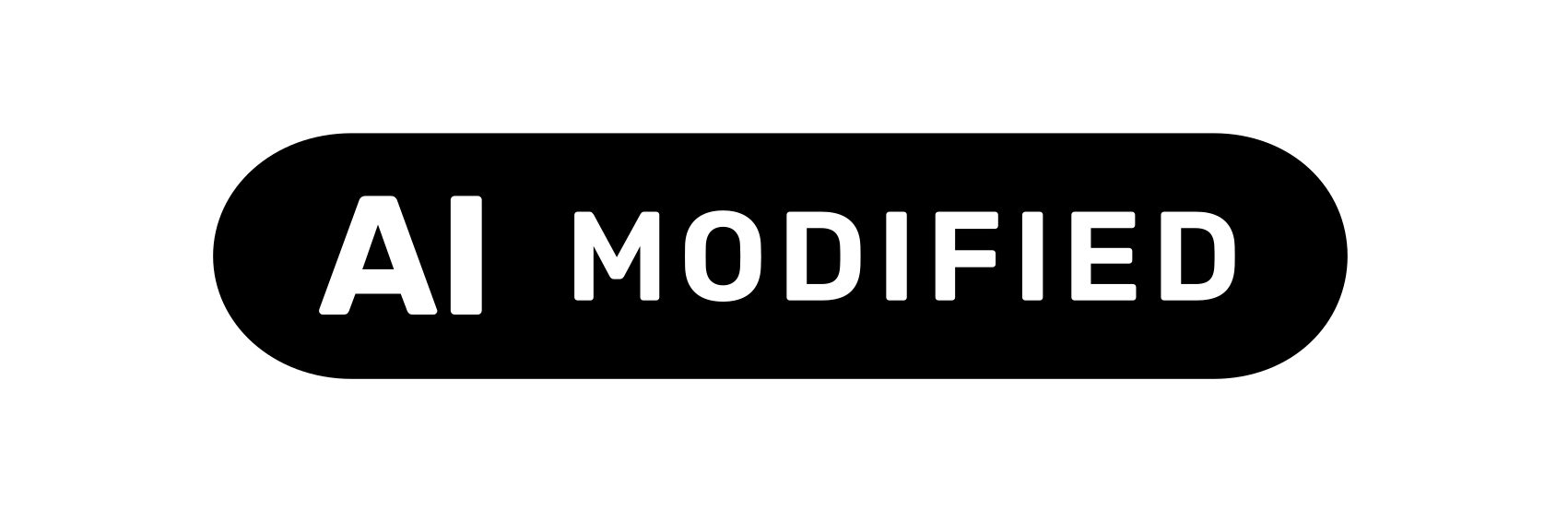
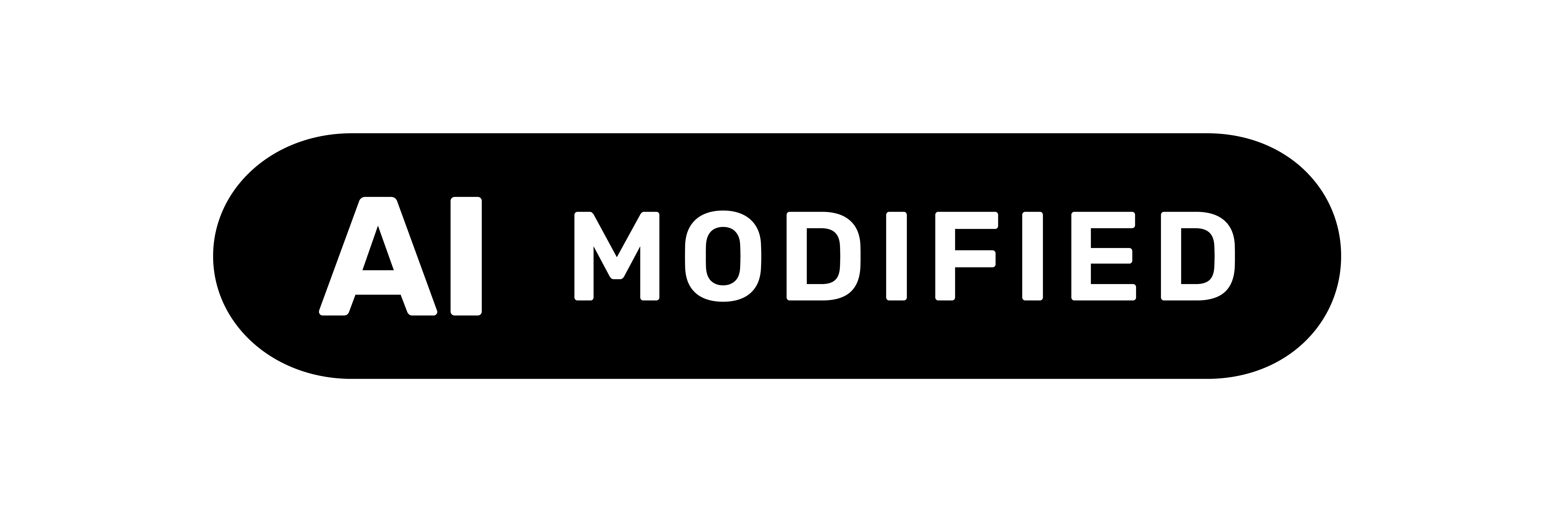
Partially AI-Modified
Use when pre-existing human-made material was altered with AI in a way covered by the transparency rules.
Need every colour and transparency variant? Download the complete packs from the European Commission’s official icon page.
What each EU AI icon means
1. Basic AI icon
The compact square icon is the flexible option. The Commission presents it for cases where AI was involved and for interfaces that provide a custom text label or a second layer with more detail. A publisher could pair it with plain wording such as “voice generated with AI” or “background modified with AI.”
2. Fully AI-Generated
This label is intended for an item generated entirely by AI, without human-created elements or human editorial control beyond prompting. Commission examples include fully generated deepfake video, music, art and automated news summaries.
3. Partially AI-Modified
This label is for existing human-made material that was modified with AI in a way that brings it within the relevant disclosure rules. Examples include replacing a person’s face in a real photograph or using AI to add furniture to an authentic property image.
When does the EU AI Act require disclosure?
Article 50 distinguishes between obligations for AI providers and obligations for deployers using AI professionally. Providers of systems that generate synthetic audio, images, video or text must support machine-readable marking and detection, subject to the detailed scope and exceptions. Deployers must clearly disclose specific categories of content shown to people.
The deployer-facing disclosure rules notably cover:
- Deepfakes: generated or manipulated image, audio or video that resembles real people, objects, places, entities or events and could falsely appear authentic.
- Public-interest text: generated or manipulated text published to inform the public on a matter of public interest when it has not received human review or editorial control and no person or organisation assumes editorial responsibility.
The Article 50 transparency obligations apply from August 2, 2026, according to the European Commission’s current guidance. The guidelines contain the fuller interpretation of who is in scope, what counts as synthetic content and how exceptions operate.
Not every use of generative AI automatically requires one of these visible icons. The legal test depends on the content, the role of the organisation publishing it and the conditions in Article 50.
Important exceptions and adjustments
Evidently artistic, creative, satirical, fictional or similar works may use an appropriate disclosure that does not interfere with the work’s display or enjoyment. The rules also contain an exception for certain legally authorised uses connected with criminal offences. For public-interest text, the disclosure duty does not apply where there has been human review or editorial control and a person or organisation takes editorial responsibility.
How to display an EU AI label
The Code of Practice provides the detailed placement framework for signatories. The Commission’s public summary highlights a few practical principles that are useful for any implementation:
- Make the disclosure clearly perceptible no later than the viewer’s first exposure to the content.
- Place it where another interface element will not cover or obscure it.
- Embed it into the content or use an equivalent interface overlay when appropriate, and preserve the disclosure when the content is downloaded or reshared.
- Use a clearly visible size and pair the icon with plain, specific language when that improves understanding.
- Add accessible text, such as an alt description or ARIA label, and make any second information layer keyboard and assistive-technology accessible.
Can you use the EU AI icons for free?
Yes. The European Commission states that the icons are freely available for everyone to use and do not require attribution to the Commission or the AI Office. Signatories to the Code of Practice should follow its placement specifications. Use by a non-signatory does not mean that the organisation has signed or adheres to the Code.
The Commission also makes an important distinction: displaying an icon does not, by itself, prove legal compliance. The deployer remains responsible for providing a disclosure that satisfies Article 50 and any other applicable European or national rules.
Frequently asked questions
Are the three EU AI icons mandatory?
No. The official icon set is optional. Relevant Article 50 transparency duties are mandatory, but an organisation may use another adequate disclosure method where permitted.
Which file format should I download?
Use SVG for websites, apps, video overlays and any layout where the label may be resized. Use PNG for office documents, presentations and publishing systems that do not support SVG. Keep the label’s proportions intact in either format.
Does the icon need accompanying text?
Context matters. The Commission reports that user testing performed better when the Basic icon appeared with a text label. Plain wording that explains whether content was generated, modified or includes a specific synthetic element is more informative than a symbol alone.
Does a small AI edit always require the Partially AI-Modified label?
Not necessarily. Standard editing and uses that do not substantially alter the input can fall outside parts of the marking framework. The Commission’s guidelines should be used to assess the exact workflow rather than treating every AI-assisted adjustment as equivalent.
Official sources
- European Commission — EU Icons for labelling AI-generated content
- EUR-Lex — Regulation (EU) 2024/1689, including Article 50
- European Commission — Guidelines on Article 50 transparency obligations
- European Commission — Code of Practice on Transparency of AI-generated Content
This guide is an informational overview, not legal advice. For a specific deployment, review the regulation, the Commission’s guidelines and the final Code of Practice.